Two desk system

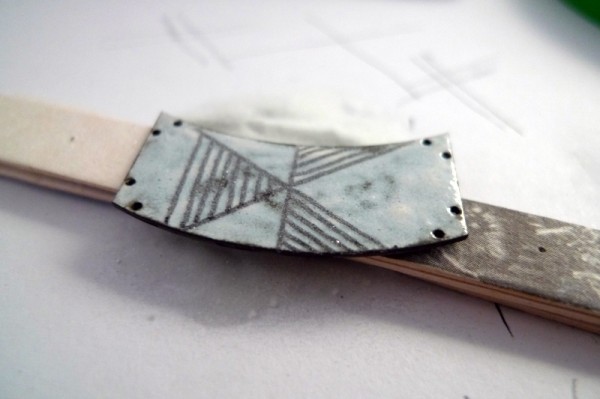
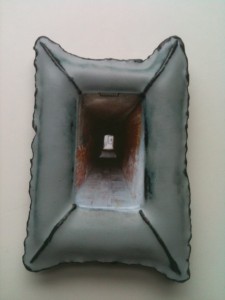
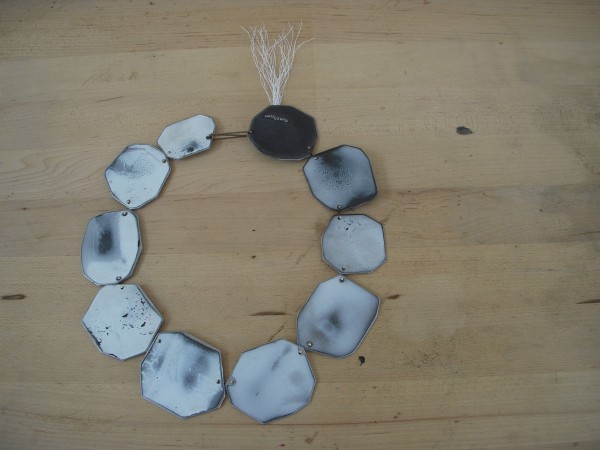
On the jewellery bench - this object needs a trim

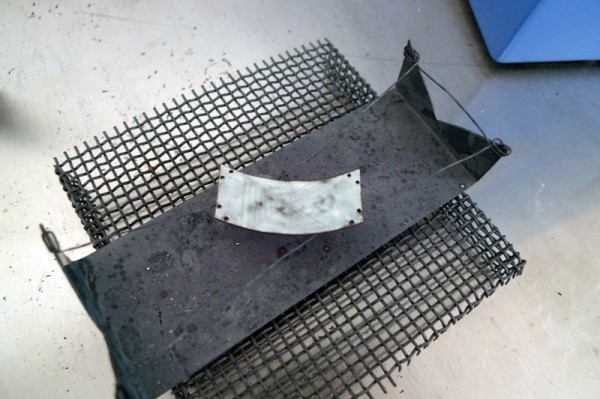
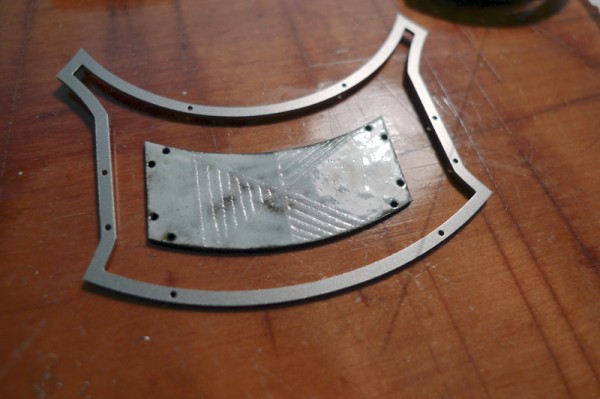
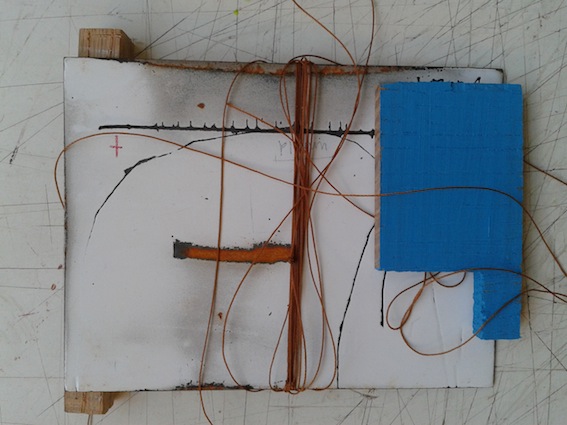
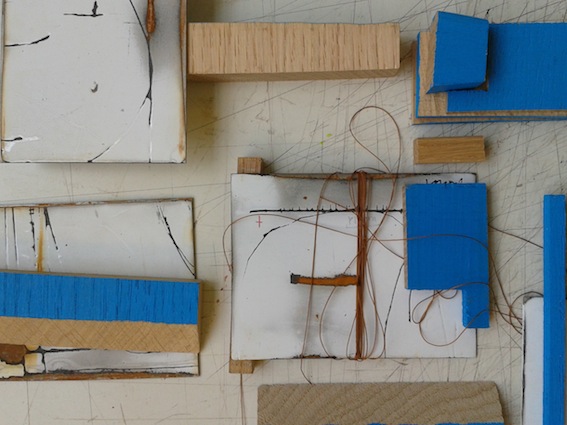
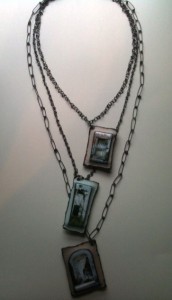
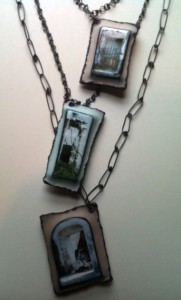
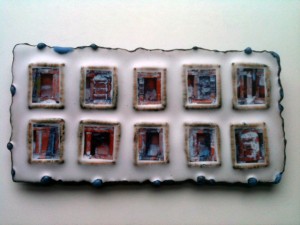
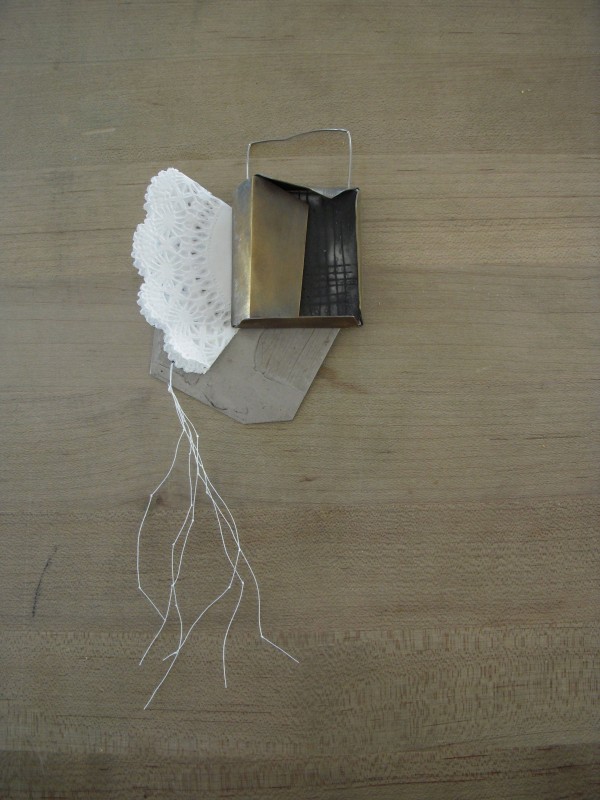
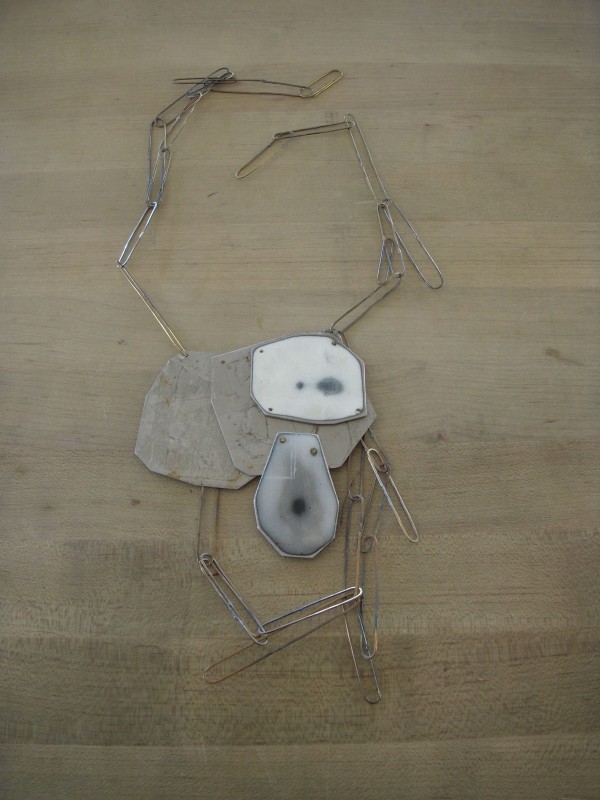
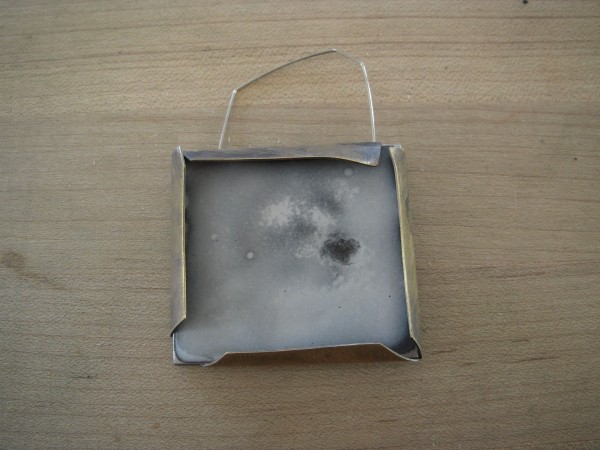
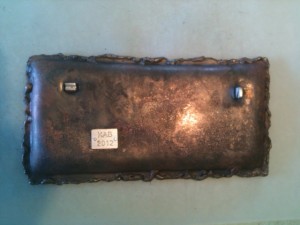
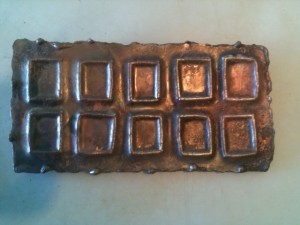
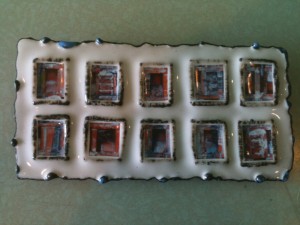
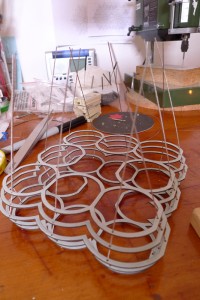
There was the jewellery bench and the enamel desk in my St Kilda studio. At any time there could be a pile of metal on the enamel bench ready to go, as well as (and fed directly from this pile) a stack of enamelled segments on the jewellery bench, awaiting stringing into a single piece. By the end of my progress in making works for this exhibition, enameling and making days would alternate, which allowed my studio to cool down between firing days. It also meant that I would have to concentrate hard and think creatively on enamelling days, while on making days more dexterity, but less imagination, was needed to complete the pieces. By this point, the tethering points and fixing methods I was planning to use had been decided, just the work of ordering and joining remained.
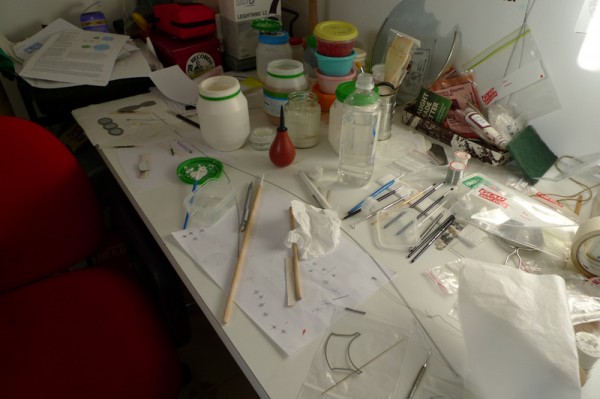
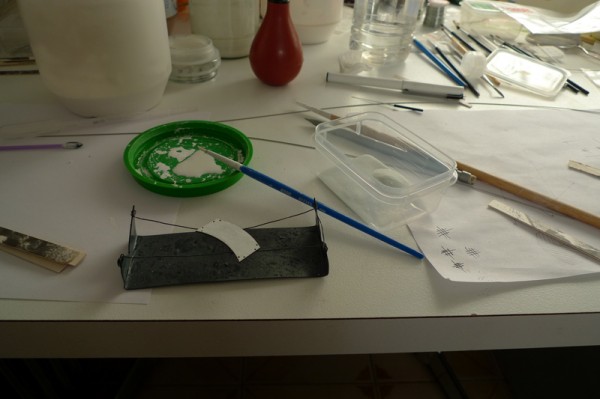
Productive clutter on the enamelling desk
Liquid enamel, a drying piece and to the right, a container holding glass bead sandblast medium
The previous piece, fired once, with marker attaching glass sandblast beads
Freshly fired
And onto the jewellery bench, ready for the next phase


Melissa Cameron

Melissa is a jewellery artist from Australia living in Seattle in the US. Her works can be found in the National Gallery of Australia as well as the Cheongju City Collection in South Korea. Her enamel works typically display subtle enamel incursions amidst precise laser cut stainless steel layers.

last minute firings

Hi fellow exchangers,

I have been watching the recent blogs with excitement to see the range of work that will soon arrive in Phoenix, and I feel very lucky to be travelling to USA to help hang as I will get to unpack and look at the work up close. It’s going to be an amazing show of great diversity and energy.

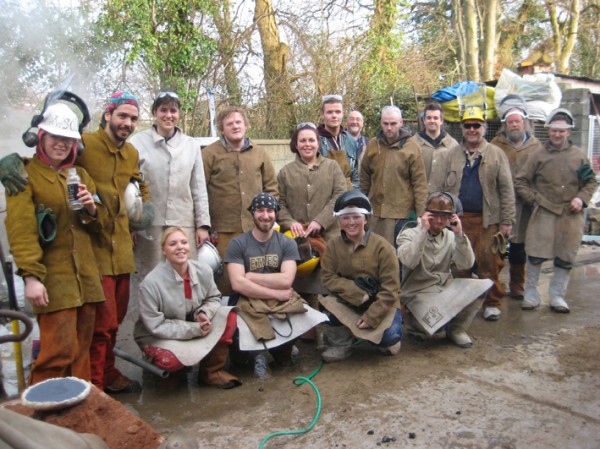
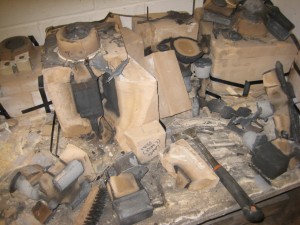
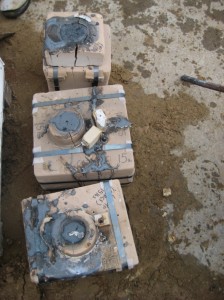
I was able to finally focus on making my own work over Easter because I teach full time: it’s been so frustrating but fulfilling to make sand moulds, pour iron and crack the process for enamelling a different material. My work was poured alongside 600 pounds of iron by CSG BA Sculpture department….


in exchange for a few beers,

The moulds poured more or less fine with a few air pockets that I have managed to fill with industrial iron undercoat which is very forgiving.


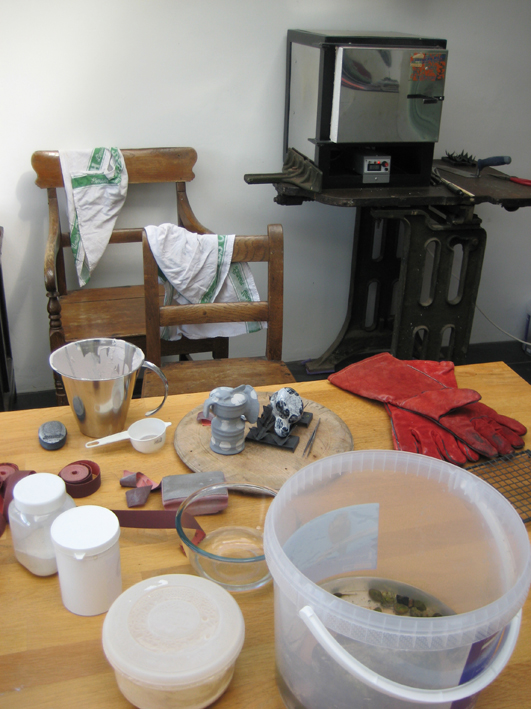
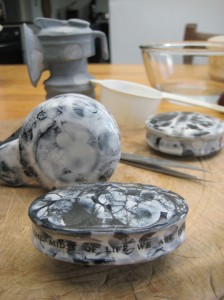
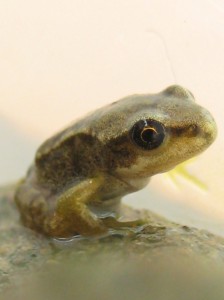
My results vary in success and my kitchen has had to double as a studio which has brought all attempts at cooking to a standstill: my family will be relieved when time runs out for that last minute firing as will the cats, guinea pig and my daughter’s tadpoles that vie for space on the kitchen table!


I continued to develop my coal mining theme but work has become more abstract because of exploring layering through multiple firings. I  wondered if any of you have also had no time to reflect on a new body of creative thought and physical endeavor? This show has been instrumental in keeping my practice focused on enamel and I have some important ideas about how to arrange my ‘dream’ studio next year – and navigate part time work!

I wish everyone great success for the exhibition, Cath


Catherine Fairgrieve

Catherine works across discipline boundaries, excited by the potential of combining traditional processes with new technologies. She is an artist and educator, and lives in Wales.

Incoming

I am finally starting to finish this work! I apologize for the poor quality photos. There is no time to stop and fuss. In the next entry, I will post the last pieces and sort out some of my thinking about this new work.

Kathleen Browne

Kathleen Browne is an artist and educator from the USA who featured in our first Heat Exchange edition in 2012, and is back for the 2015 exhibition.

embedding findings

In response to Melissa’s comment about embedding the finding for an enameled piece, I thought I would add a few images as to how I do this for welding, then enameling. I am trying something new and this is how I do it.

First, of course, I fabricate the pin back finding. For a vertical piece I use a “barrette” style pin back. After I make the findings, I hard or IT solder wires into tiny holes that I have drilled into the back of the findings. In some cases, I use pins that go through form front to back to avoid soldering that could melt during enameling process. I then feed the wires through matching holes that I have drilled into the back of the brooch before welding. Before I do that, I chase a seat for the finding so that there is a place for it to rest and a place for the enamel to pool around the finding.

I then turn over the piece so that the wires are exposed and with a mini torch, I ball up the wires until they lay flush with the interior surface. I then weld the two halves together and enamel. The most difficult part of this is to weld the copper without melting the silver findings as the melt temperatures between silver and copper are so different.


placing findings before attaching


balled up wires on the interior before welding


exterior with findings before welding


front of brooch after welding


front of brooch after enameling and before etching


brooch, before welding-how to protect findings


findings after welding


front of brooch after welding


front of brooch after enaneling and before etchingback of brooch with findings-before clean-up and etching


Kathleen Browne

Kathleen Browne is an artist and educator from the USA who featured in our first Heat Exchange edition in 2012, and is back for the 2015 exhibition.