Category Archives: Australia

Out with the old

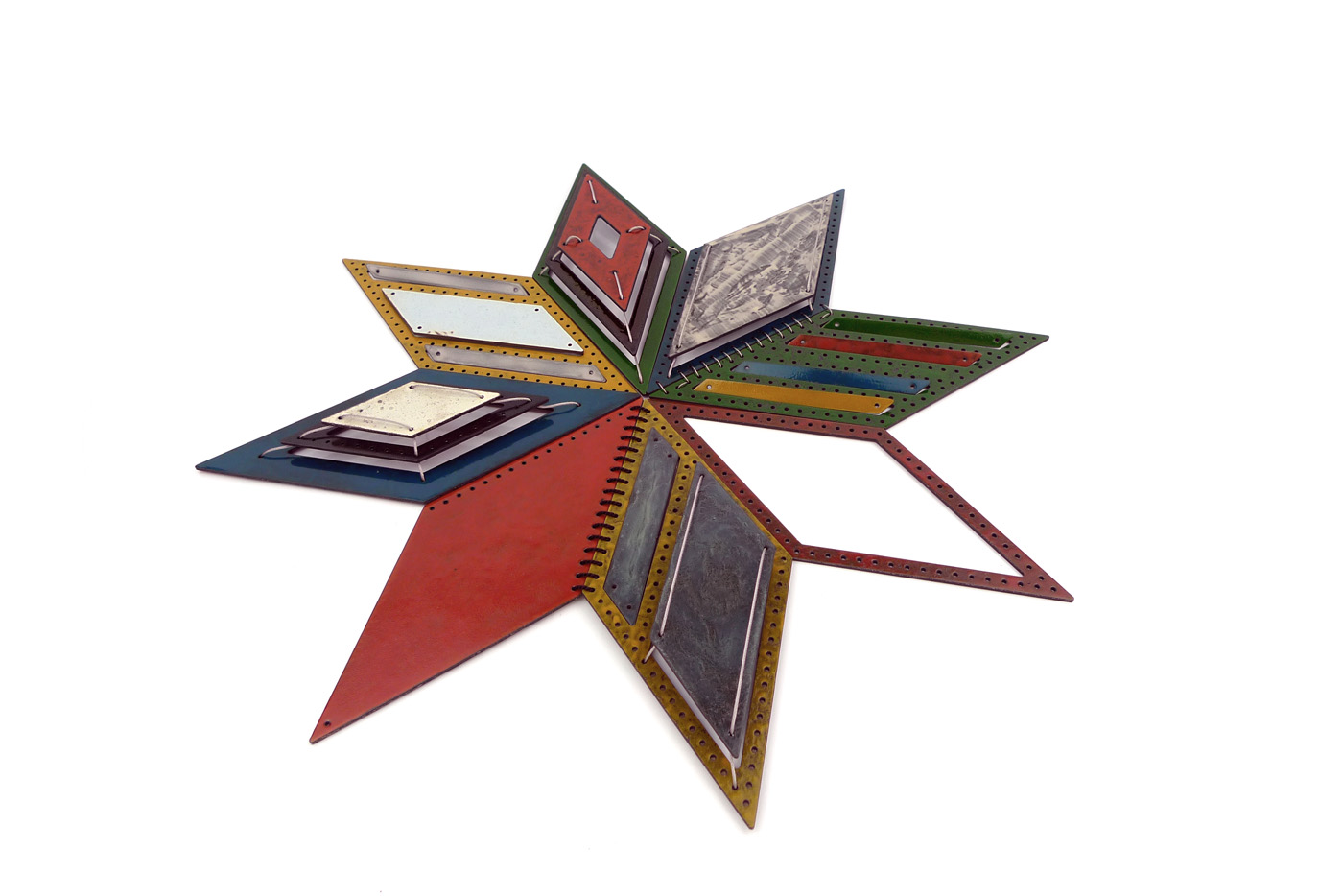
Jewel for a wall - 8 rhombii

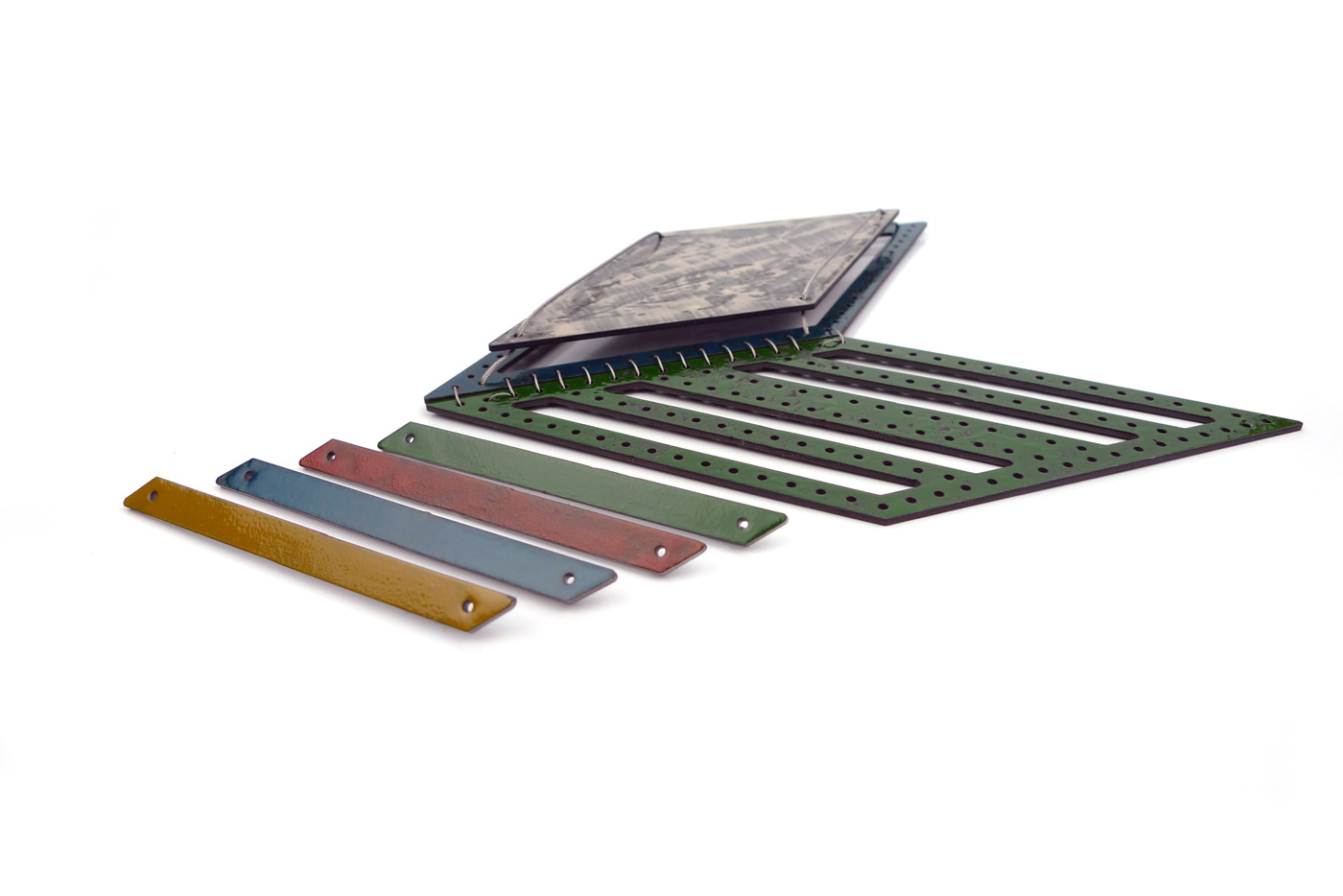
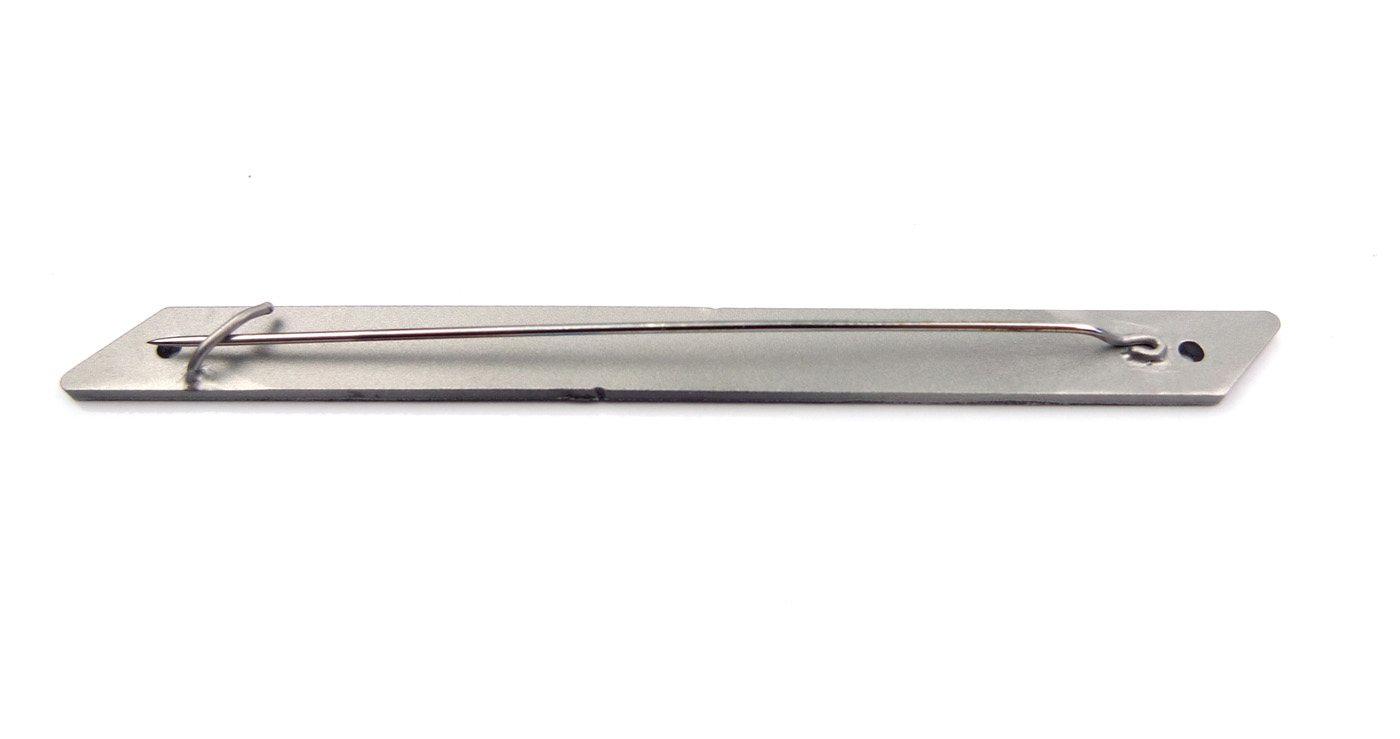
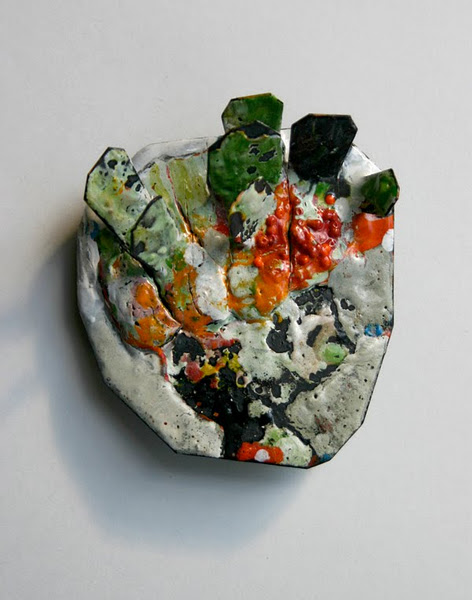
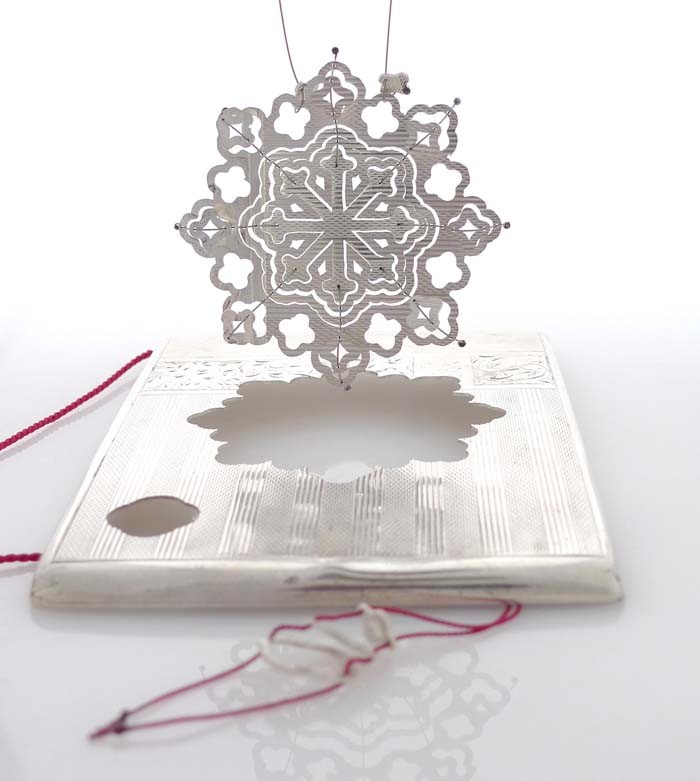
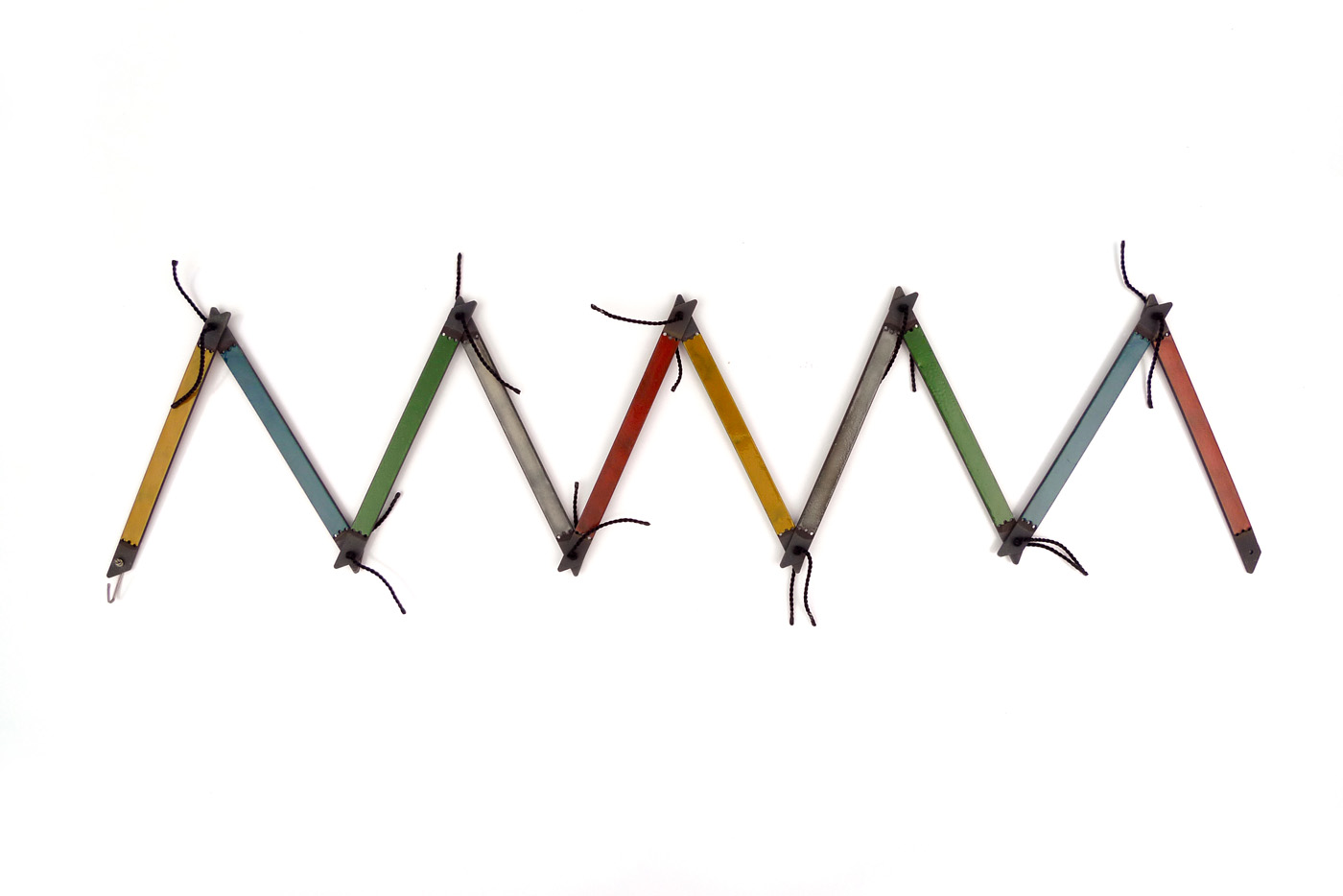
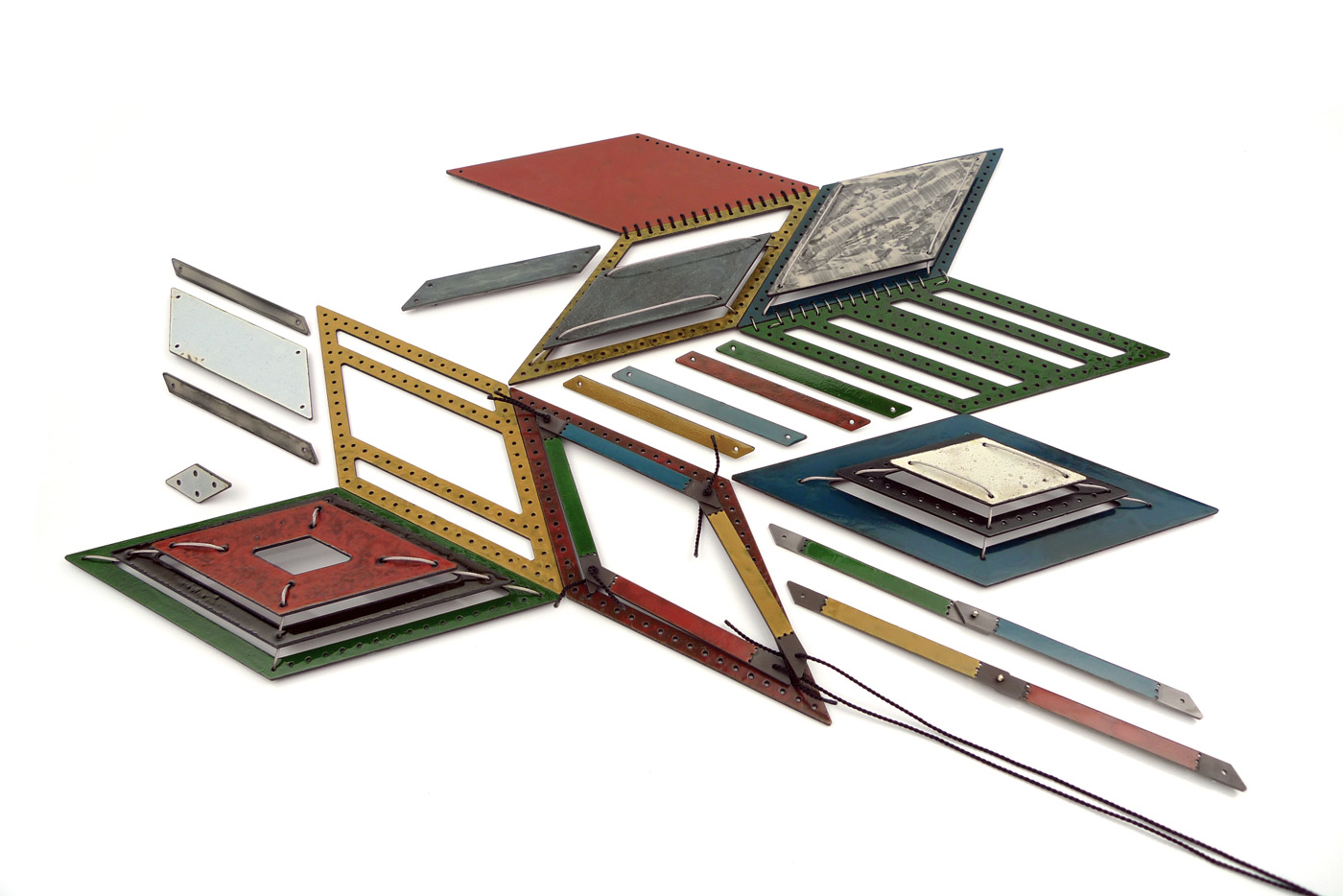
Quite a while back I finished working on the objects that I enamelled in Erfurt (earlier posts here and here), the Jewel for a Wall piece. The name reflects that the parts assemble into a single object suitable for display on a wall, while many of the individual components are human-wearable as well as wall-adornable.

Not long after their completion I realised that these would not be what I will exhibit in Heat Exchange 2. These works were conceived quickly to illustrate the potential of using a base shape that when aggregated could become a tessellated  pattern or alternately, used singly or in small groupings as a stand-alone piece. And to illustrate that idea they worked perfectly. However, the evolution of the themes that I’m working with in the rest of my practice has reached a point where the investigations happening in my hand-cut works are becoming bigger, involving objects that take days to cut by hand. I’m at a point where it makes sense to use the laser cutter to do that work for me. So I’m designing a piece that will be cut quickly and enamelled slowly, and be in alignment with the research I have been doing on weapons for those works.

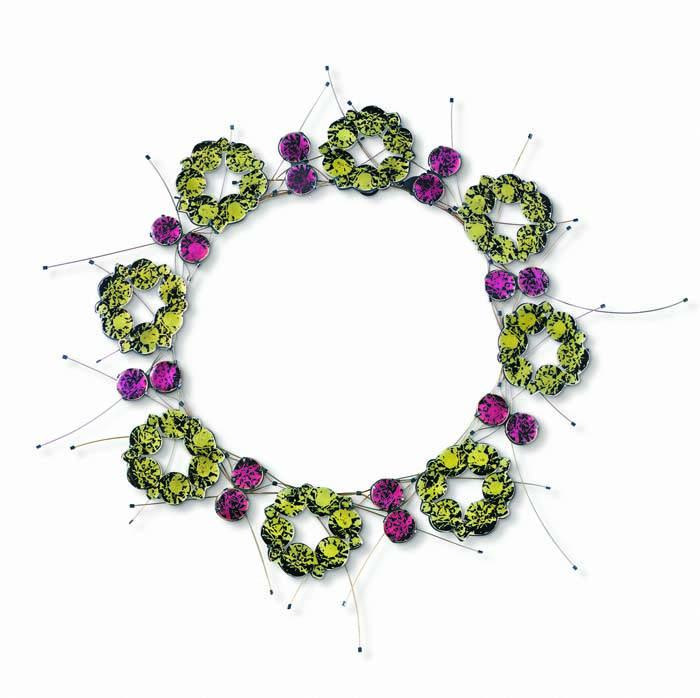
Jewel for a Wall has been instructive, and, like the necklace pieces that I put up here in my last post (which were a trial for what went on to be 3/4’s of a piece with Sean Macmillan called Quatrefoil Quartet), it demonstrates the strategies and processes that the new works will build on.

I’ve vague ideas for what I’m making, and as yet no plan drawing to show you what it will look like, but Jewel for a Wall and the complete Quatrefoil Quartet are the best indicators I have to give you a feel of what my research is pointing towards, and what that might look like.
Jewel for a wall - neckpiece

Jewel for a wall - wearables and non-wearables

Jewel for a wall - brooches, wall work

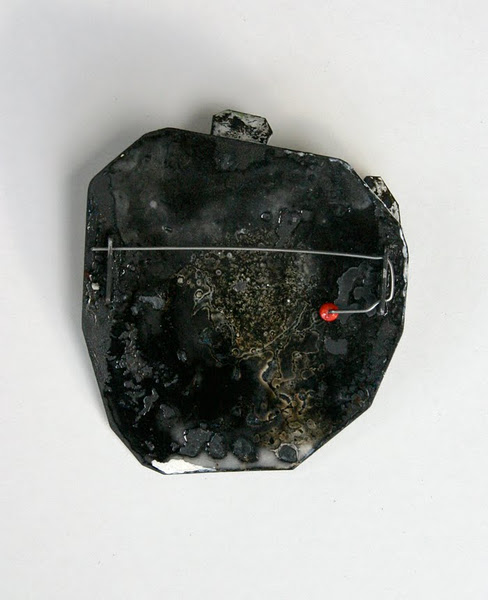
Jewel for a wall - brooch back

Melissa Cameron

Melissa is a jewellery artist from Australia living in Seattle in the US. Her works can be found in the National Gallery of Australia as well as the Cheongju City Collection in South Korea. Her enamel works typically display subtle enamel incursions amidst precise laser cut stainless steel layers.

Introducing…

Here we are, making work for Heat Exchange 2! In the two years that has passed since the last edition not much has changed.. Oh who am I kidding? This iteration of the exhibition finds me living in the USA, surrounded by the welcoming and very vibrant metals community in Seattle, Washington.

Owing to my personal cross-continental exchange, I have had the pleasure of catching a couple of other Heat Exchange participants already this year. I visited Virginia Commonwealth University in Richmond in February where I caught up with the dynamic Susie Ganch. We were concentrating on her Radical Jewelry Makeover project at the time but we managed to share a few thoughts on enamel while she gave me a walking tour of her city.

Susie Ganch in the metals studio at VCU in Richmond, Virginia. 2014

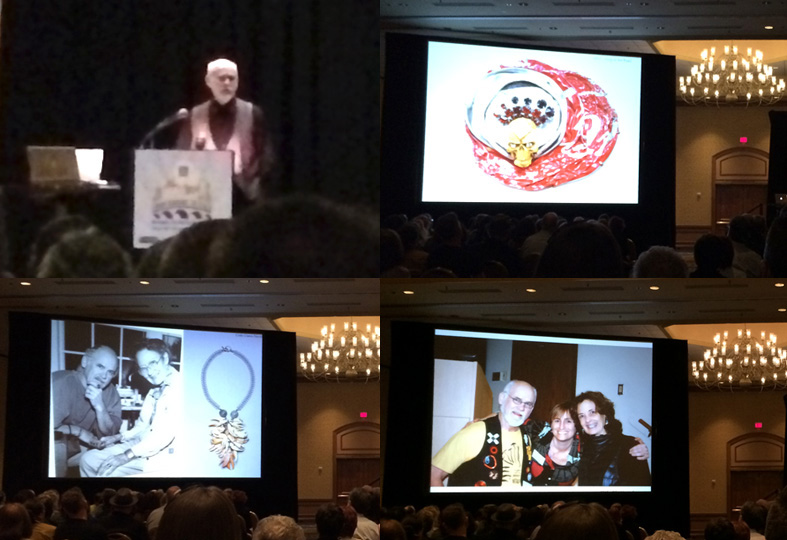
Next up, I was at SNAG where Robert Ebendorf was honoured as this year’s Lifetime Achievement Award Winner. I’d like to say I managed to snap a selfie while the two of us shared a few words, but with SNAG conferences being what they are, after his award ceremony I did not spot him for the rest of the weekend! So, please excuse the grainy photos of Robert, but as you can appreciate the auditorium was full for his award ceremony.

Photo montage of Robert Ebendorf receiving his award at SNAG 2014

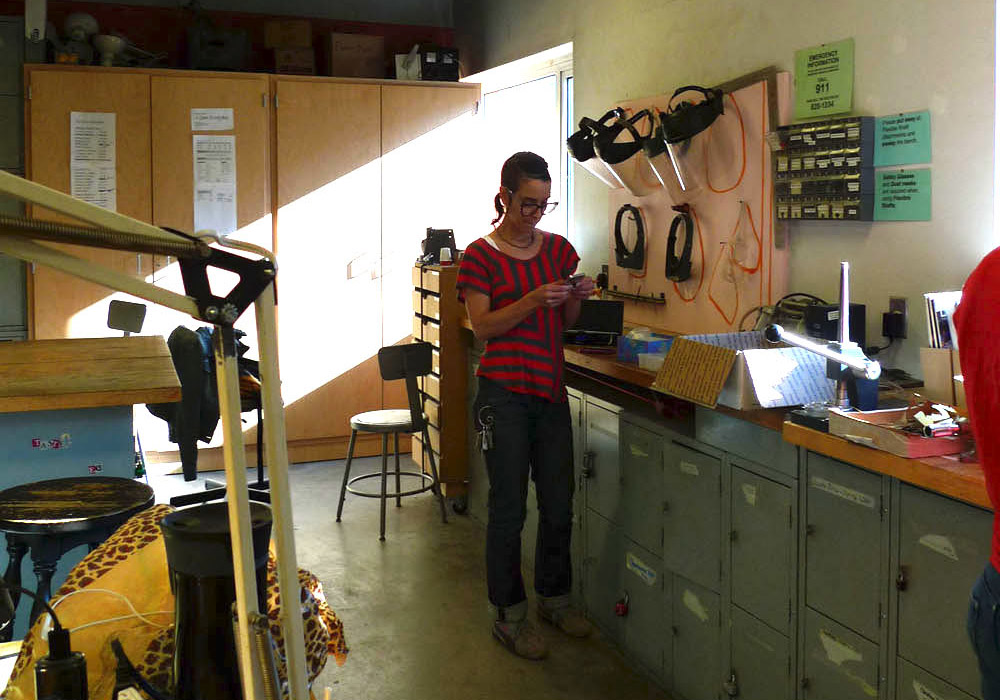
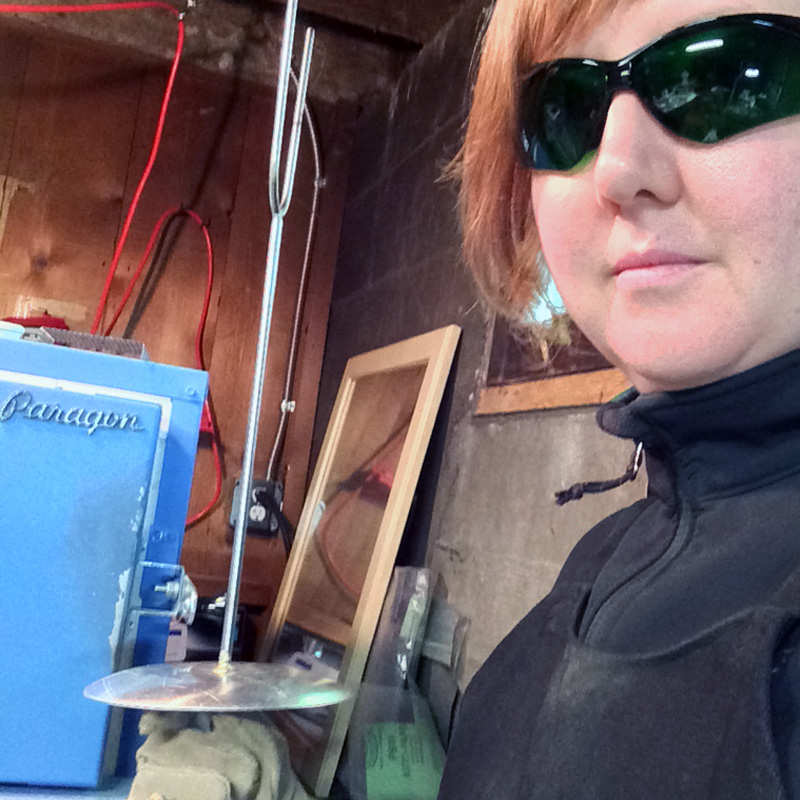
So that just leaves me. Here’s me in my basement studio in Seattle, about to face a moment of truth…

Melissa by the kiln


Melissa Cameron

Melissa is a jewellery artist from Australia living in Seattle in the US. Her works can be found in the National Gallery of Australia as well as the Cheongju City Collection in South Korea. Her enamel works typically display subtle enamel incursions amidst precise laser cut stainless steel layers.

Enamel animals

Hello from Melbourne! Here is a short story while a tightly wrapped parcel travels over the oceans, of how my work for Heat Exchange evolved.

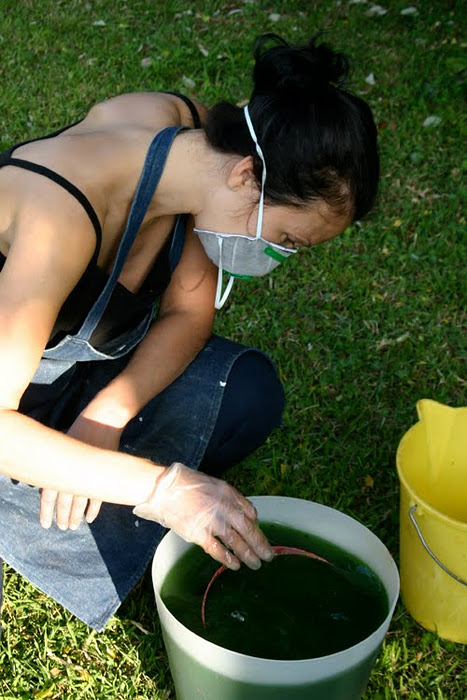
As a metalsmith, I’m currently interested in different types of steel which can be welded into structures that safely withstand the heat of the kiln, and the application of liquid enamels which allow me to paint metal surface like canvas. The solid structure of steel and the fluid patterns of liquid enamels create a challenging, fascinating combination for ongoing investigation.

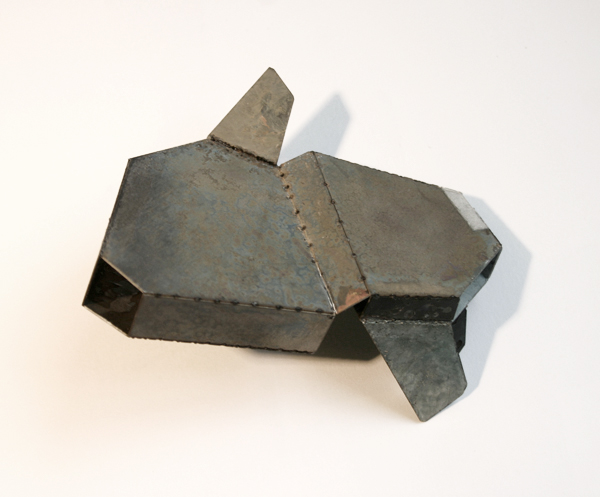
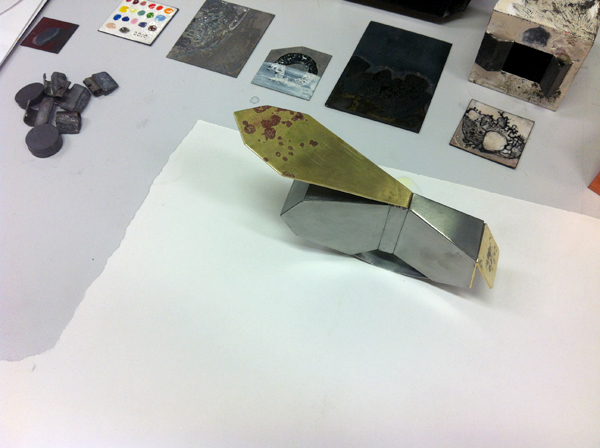
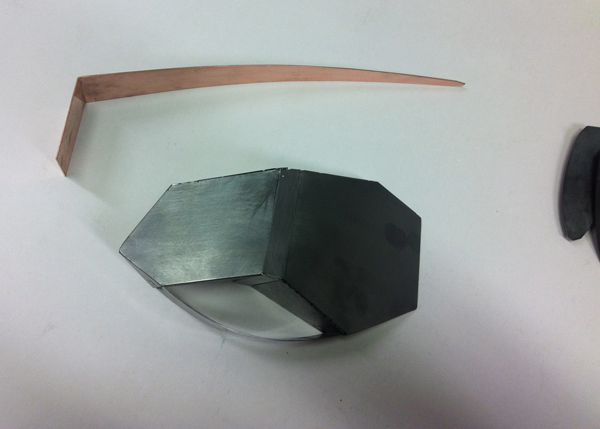
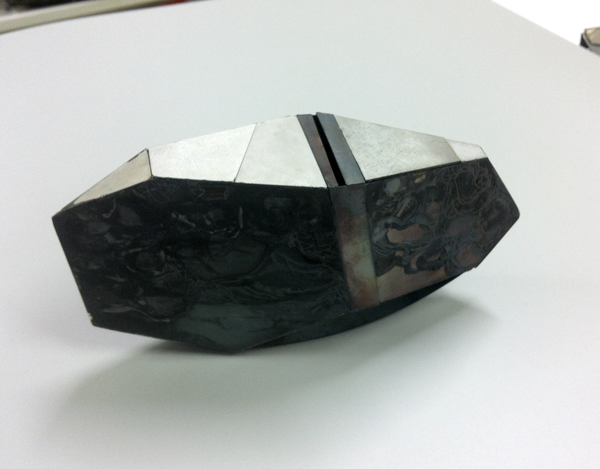
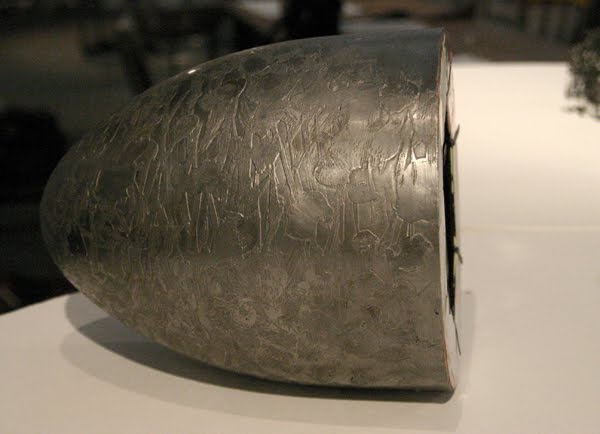
My starting point was this steel model from last November, based on studying forms at airports. I wanted to see how I could use similar angular shapes in slightly larger object-based work. Initially, my plan was to continue developing pieces on the airport theme, but as I begun sketching, the idea of movement and a more playful concept about “flight” emerged. I decided to make two winged containers, “enamel animals”, balanced with weights in hidden compartments. I thought they could softly move, if touched, upon their curved bases.

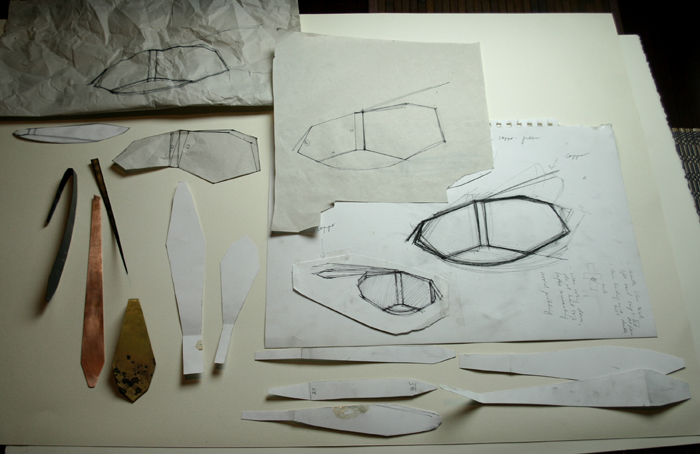
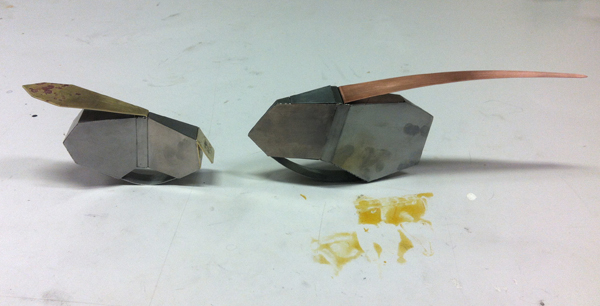
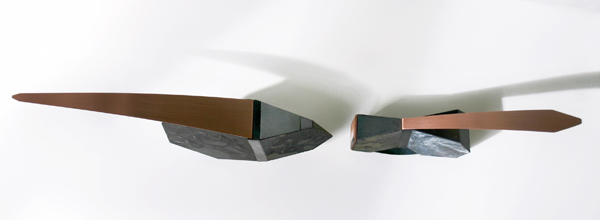
Above are some initial sketches and cardboard models of different wings, and the following images show the evolution of the two objects after welding, going through a couple of different variations of wings and noses. Here you can also see some of my first enamelling samples with liquid enamels on steel and copper, created in 2010 during the life-changing workshop by Elizabeth Turrell in Perth. These early experiments still strongly inspire my use of layers, line and colour in enamelling.

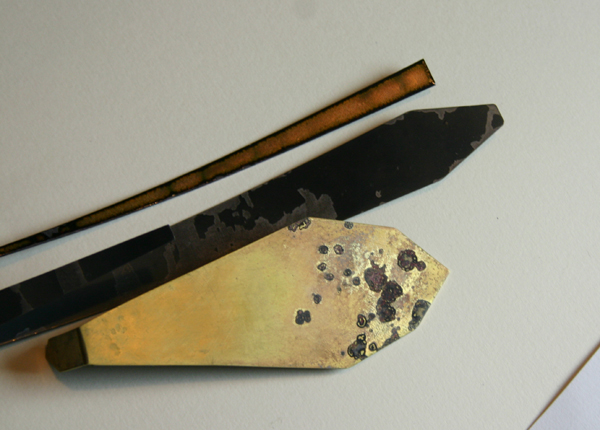
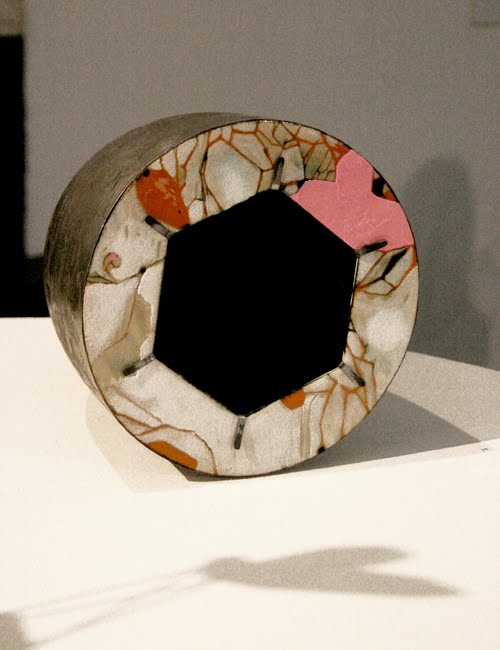
The wings slot into the objects so that they could be inserted separately, without oxidising in the high temperatures of the kiln.

The main materials used for the work were mild and galvanised steel, welded and cold-joined, then enamelled with clear liquid #969 and P3 pigment for surface texturing,

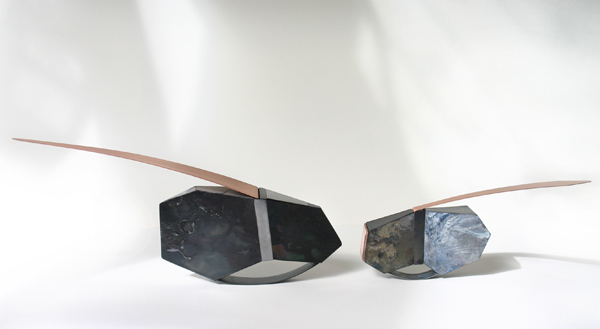
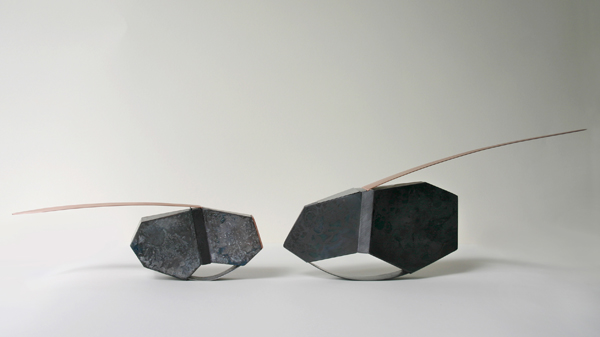
And finally, the finished pieces:

“Enamel Animals, two figures having a conversation, are carefully balanced containers with secret compartments for weights (or any other small, heavy things you might need to hide). If touched, the animals will gently rock, perhaps nodding in agreement, with quiet knowing… “

Cheers and warm regards to everyone – can’t wait to see all the final works!

Inari

Inari Kiuru

featured in our first Heat Exchange exhibition in 2012.

Drawing a brooch

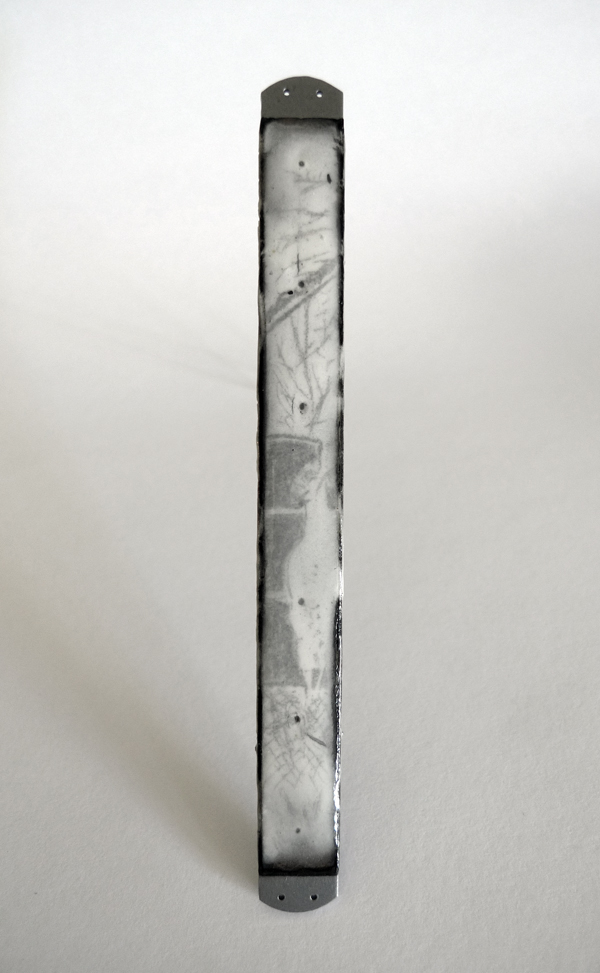
My enamelled test piece, Slivered Coaster. Melissa Cameron, 2011. Mild steel, graphite, vitreous enamel, 925 silver fixings

This is an enamelled piece that I made as a response to a recent work, and as a test piece for my works for the Heat Exchange project. Thus it has some faults, but has also proven to be quite instructive in determining what I’m after, especially in terms of the shape of metal substrate I’m seeking to use for my current works-in-progress.

I’m going to analyse it, for my own reference, (something I guess I would normally do, but not ‘out loud’ like this), starting with the faults, as I see them.

– The edges need better finishing – I’ve ordered some diamond abrasive pads and would ideally smooth the edges to be consistent. I actually like the black frame line too – but I think I have to work at making it a little more consistent also.

– The line of dark dots down the centre – these were intentional as they mark holes in the metal that the enamel has covered, and were kept to match the work that this piece was responding to. They seem out of place in this work however, so I would not be working to cultivate them if I made this piece again. (Having re-read this, and looking again at the image, I’m now wondering about my Descartes connection, and what I have drawn so far. In some instances maybe they will stay…)
– The clarity of the drawn image – It’s not clear what it is, and I think this results from the choice of image combined with its use in such a tight area.

The things that I like about this work

– The shape and its potential omni-directionality

– The graphite drawing – there is something very beautiful about the overall materiality. Several people have mistaken it for mother-of-pearl, which is interesting. I made another brooch on the same day, but the markings in graphite are less interesting/evocative.

– The combination of sandblasted metal + enamel – Shiny versus matte. Contrast is good.

That’s a lot of feedback, from one small piece, 105mm x 10mm.

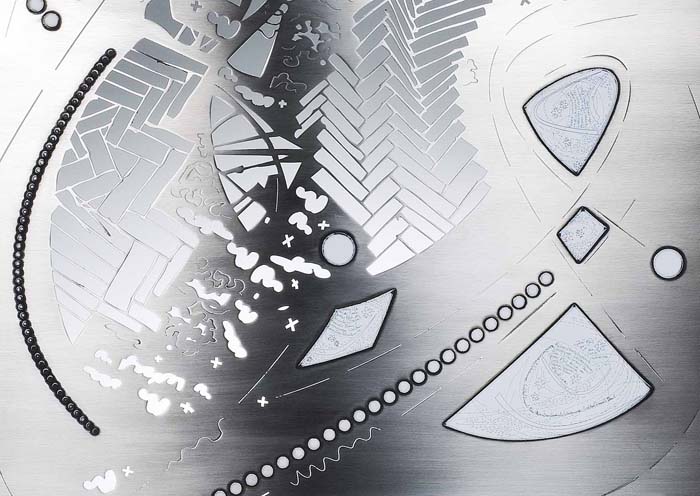
I’m in the process of drawing patterns, that I will have laser-cut in stainless steel. This is the first time I’ve made these drawings with enamel in mind. It’s a long process, so it still feels like I’m a long way from doing any enamelling.


Melissa Cameron

Melissa is a jewellery artist from Australia living in Seattle in the US. Her works can be found in the National Gallery of Australia as well as the Cheongju City Collection in South Korea. Her enamel works typically display subtle enamel incursions amidst precise laser cut stainless steel layers.

a place to think

It is wonderful to be in touch with you all as we work toward this exhibition.

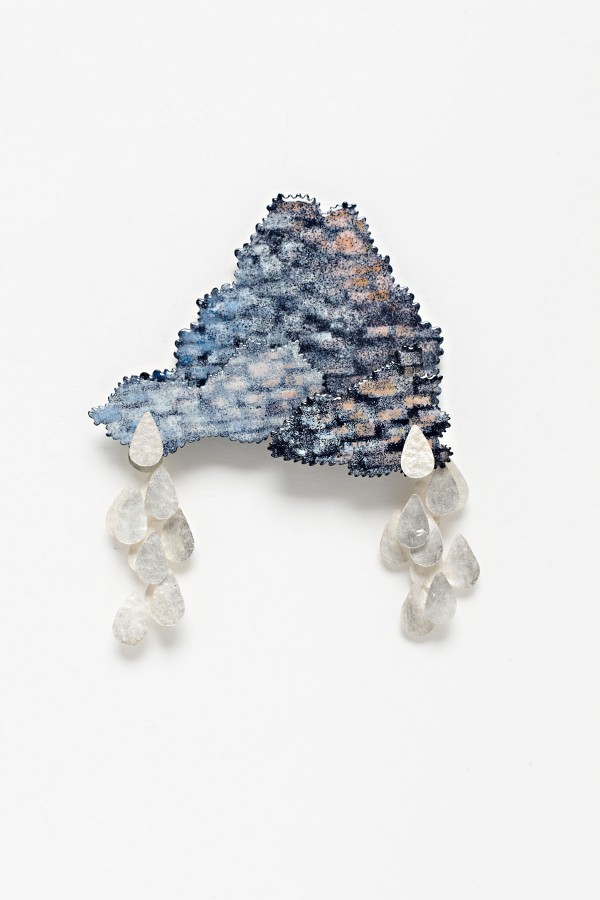
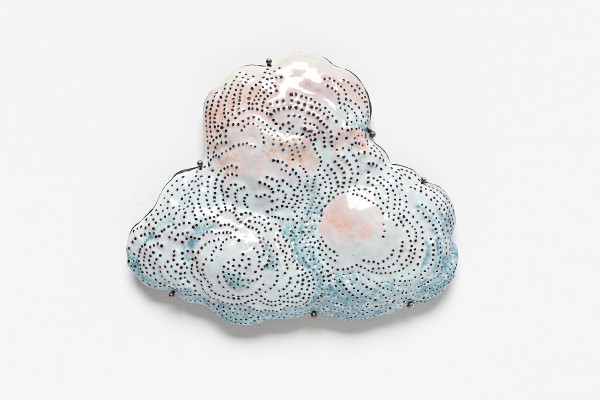
I am Kirsten Haydon and I have been working with enamel since 1997. I have always found myself to be intrigued by its mysterious and magic qualities, the expected and the unexpected.

Debbie Sheezel, a wonderful enamellist who taught herself the process of enamelling over forty years ago, first introduced me to enamel at RMIT University. Debbie shared her passion, enthusiasm and knowledge of the material and inspired many students to explore its potential.

I now teach enamelling at RMIT University and I have been lecturing there since 2002. I find that I discover more as the students succeed with their visions.

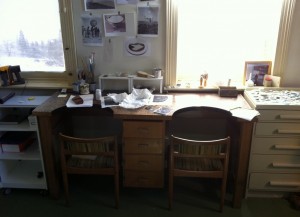
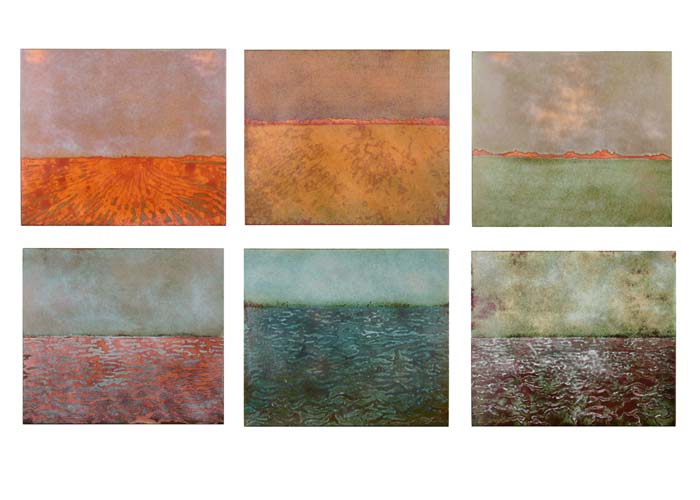
My own research is in the area of Antarctic landscapes and when I am not teaching or with my family I find myself thinking and remembering my experiences of this landscape.

My recent works … Naoko

Hello heat-exchangers!

I am Naoko, from Melbourne, Australia. I am currently doing a residency at RMIT University in Melbourne, learning from Dr. Kirsten Haydon.

I came to Australia from Japan 7 years ago and my experiences and findings in between two cultures has been the catalyst of my creativity.

I am thrilled to be a part of the exhibition, and looking forward to seeing everyone’s creative journey!

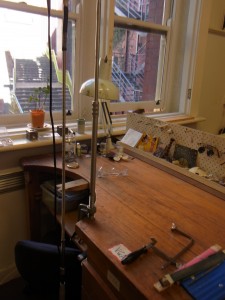
Here is a shot of my studio…

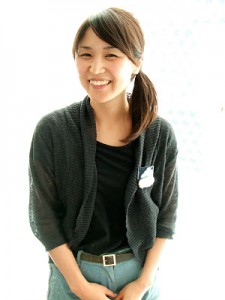
and me.

Naoko Inuzuka

featured in our first Heat Exchange exhibition in 2012.

a little light reading…

I’ve been reading up on René Descartes, the philosopher/mathematician. The guy who had a whole coordinate system named after him, as he provided the link between algebra and geometry on which the later Cartesian system was based. (The name he took, in Latin publications, was Cartesius)

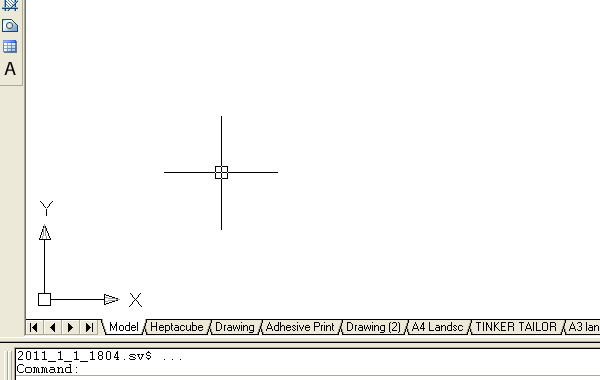
I can’t say that I was much of a fan of him when I was first studying maths, but I have become more interested over time, mostly through the practical applications of his works that I use constantly in Cad drawing software. At the corner of the screen in which I work (the AutoCad image above,) there is always an x,y axis to remind me that I’m working in Cartesian space.

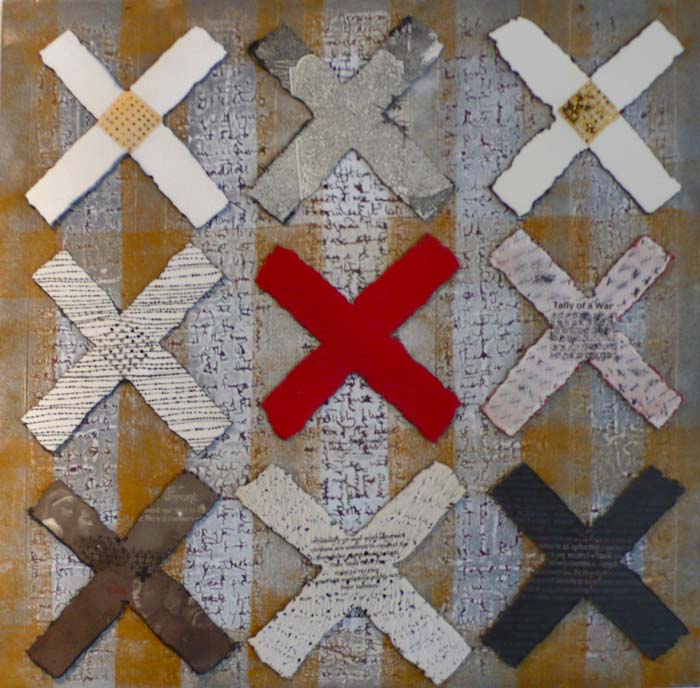
I’m reading his text Discourse on the Method of Rightly Conducting the Reason, and Seeking Truth in the Sciences. My work has mined the cross as a motif before, so I’ve turned to the master for some inspiration, sparked off by the axis (and the AutoCad crosshairs don’t hurt) that I see so often.


Melissa Cameron

Melissa is a jewellery artist from Australia living in Seattle in the US. Her works can be found in the National Gallery of Australia as well as the Cheongju City Collection in South Korea. Her enamel works typically display subtle enamel incursions amidst precise laser cut stainless steel layers.

A vessel, some brooches, and an artist’s bench …

Hello!

Inari here from Melbourne, Australia. Just a short introduction – here are some images of etching a vessel to be enamelled, and a few brooches. The main material focus of my work has been liquid enamel on steel (be it plate, safety pins or wire), inspired by Elizabeth Turrell’s workshop in Perth in April 2010, and supported by Dr Kirsten Haydon here at “home”, both legends and fellow Heat Exchangers.

The works above are all from late 2010 as I’ve had a year off making, doing written research only, but I’m currently returning to the glow of the kiln with open arms, and keen to delve into mad experiments with enamel again over the coming months.

At the end, I’ve included a little snapshot of pieces under construction on my bench at RMIT University where I’m currently undertaking Honours in Gold & Silversmithing.

Really looking forward to developing ideas and pieces for Heat Exchange, as well as interacting with everyone.

Cheers,
Inari Kiuru
ikiuru@iinet.net.au
www.inarikiuru.blogspot.com

Inari Kiuru

featured in our first Heat Exchange exhibition in 2012.

Recent enamelled work

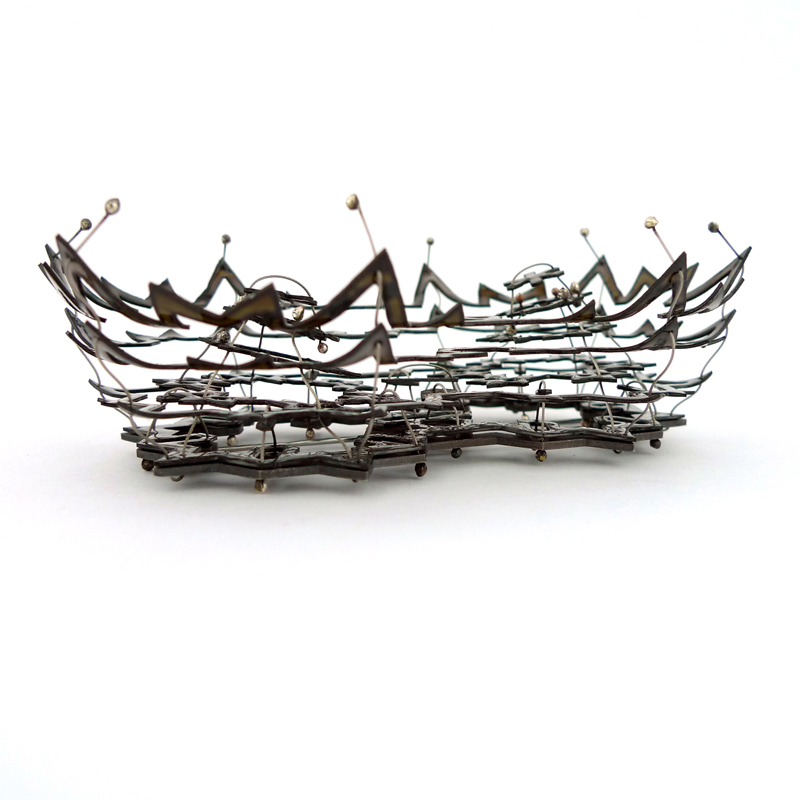
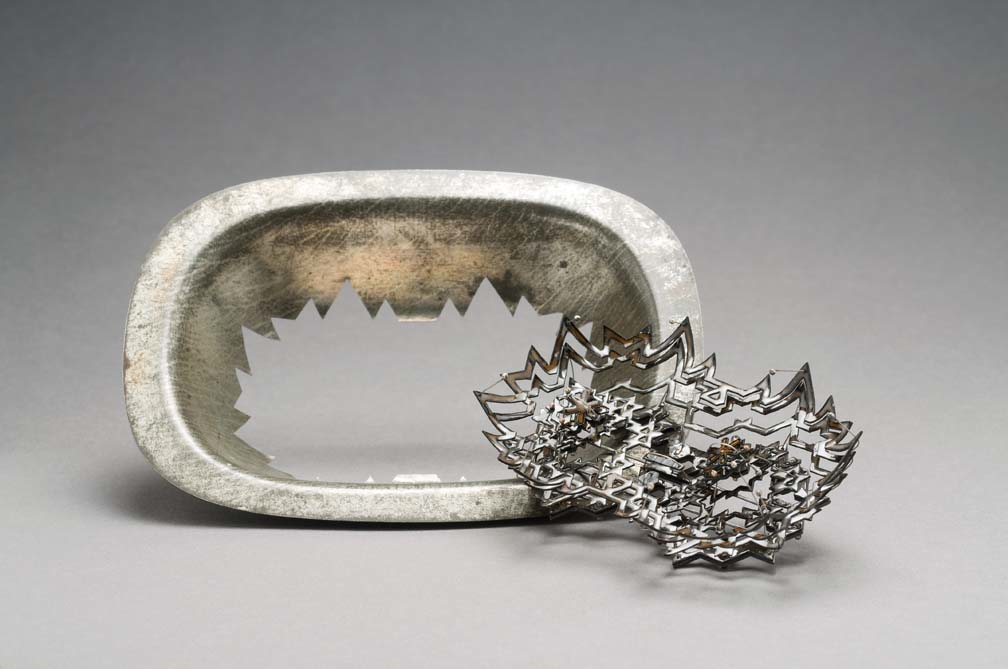
Infinity Affinity, Melissa Cameron, 2011. Mild steel baking tin, stainless steel, vitreous enamel

This piece is called Infinity Affinity, and was made in honour of Professor Ethel Harriet Raybould, the first female academic at the University of Queensland in Australia. It was made for the Tinker Tailor Soldier Sailor exhibition, curated by Kirsten Fitzpatrick for Gallery Artisan, in Brisbane, Queensland. The exhibition celebrates 100 years of International Women’s Day, by bringing together 100 Australian and Australia-based female artists to make 100 brooches for 100 famous Australian women.

Infinity Affinity (side view), Melissa Cameron, 2011. Mild steel baking tin, stainless steel, vitreous enamel
Infinity Affinity (image with tin), Melissa Cameron, 2011. Mild steel baking tin, stainless steel, vitreous enamel. Image by Rod Buchholz assisted by Andrea Higgins

The work was hand-sawn from a Willow pie dish to commemorate the fact that in order to put herself through university, Professor Raybould earned a living lecturing in Domestic Science for the Education Department in Queensland. This was because there were no scholarships available to women in the 1920’s, and because her parents did not approve of her continuing education. She first filled in for another staff member in the Mathematics department in 1930, and eventually went on to study at Columbia University for two years, returning in 1939. On her return she was reinstated as a lecturer at the University of Queensland, from where she eventually retired in 1955.

Gallery Artisan is located in Brisbane, Australia.

The exhibition will continue touring around Australia throughout 2012-2013.

Melissa Cameron

Melissa is a jewellery artist from Australia living in Seattle in the US. Her works can be found in the National Gallery of Australia as well as the Cheongju City Collection in South Korea. Her enamel works typically display subtle enamel incursions amidst precise laser cut stainless steel layers.

Introducing…

We’d like to introduce the artists participating in Heat Exchange. Below is an image of each of their works.

Elizabeth Turrell - United Kingdom
Beate Gegenwart - United Kingdom/Germany
Melissa Cameron - Australia
Jessica Turrell - United Kingdom
Kathleen Browne - United States
Inari Kiuru - Australia/Finland
Gretchen Goss - United States
Christine Graf - Germany
Astrid Keller - Germany
Kirsten Haydon - Australia
Young-I Kim - Germany
Agnes von Rimscha - Germany
Naoko Inuzuka - Australia/Japan
Barbara Ryman - Australia
Katrina Tyler - Australia

Melissa Cameron

Melissa is a jewellery artist from Australia living in Seattle in the US. Her works can be found in the National Gallery of Australia as well as the Cheongju City Collection in South Korea. Her enamel works typically display subtle enamel incursions amidst precise laser cut stainless steel layers.